
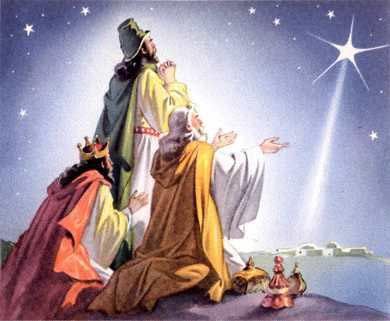
 A stranger in a foreign land, I was exhausted and homesick as my summer Spanish immersion ended in Guatemala. The rusty minivan arriving outside my small residence filled me with joyful hope. I was flying home to the U.S. and would be, at long last, completely happy. Or so I thought. After about half an hour of being home, I thought to myself, “This place is boring. I want to go somewhere.” So, I hopped in my car and left to see my friends. As I drove, I wistfully wondered, “Where am I truly at home?” The feast of Epiphany has a lot to do with our notion of home. Where is our origin? Where are we going? When is our wandering done? Saint Matthew tells us of the Magi, “They were overjoyed at seeing the star.” This star will bring them home, to a place where their questing will end, and they will be satisfied. Their real home is neither in the East nor in the earthly Jerusalem. Somehow, their home is wherever this boy and his parents are. If you’re a teenager or older, you probably know by now that every physical home we have is temporary. So, we look up at the countless stars in our proverbial skies: things which bedazzle and beckon us to follow toward peace. The Gospel invites us to behold that — at long last — God has sent us a star to follow home, one that whispers, “Follow me! I will take you home!” Perhaps that star is your spouse. A friend. An opportunity. A cause. An intuition about a new direction. A prayer group. What is it for you? How will you know? It will lead you to Mary and Joseph and their son, and you will be home.
Father John Muir, ©LPi
Weekly message
Third Sunday of Lent
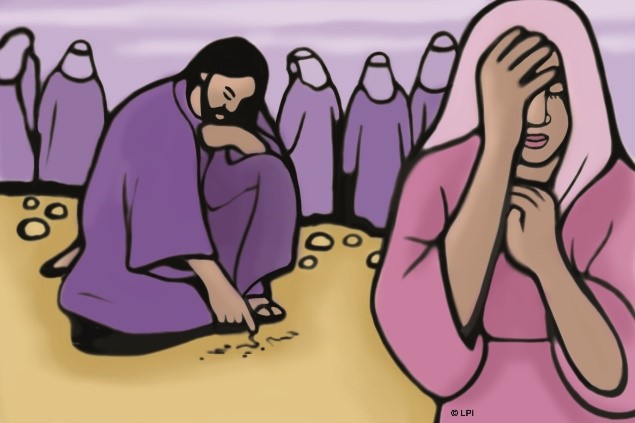 Deserts can be lonely, isolated, and treacherous places. When a person wanders in a desert, they can easily get disoriented, dehydrated, confused, lost, and vulnerable. Temptation is at its peak, especially when confronted with something that may offer some respite or relief, even a mirage. Deserts can bring us to our weakest moment and tempt our faith. The Christian journey can be described as a desert experience as we vacillate back and forth, falling victim to the mirages of our lives versus the true, life-giving water offered by God. We need a burning bush experience in our lives that convinces us of the power of God and reveals Him as the “I am” of all existence.
Moses was leading his flock across the desert when he found himself at Mount Horeb. Mountains give us a fuller perspective of life, a panoramic view of what would otherwise be hidden from the limitations of our sight. That’s when Moses met God. We have to find our way to a mountain experience where our vantage point can take on a wider view of life. Many things can do this for us: the birth of a child, the death of someone we love, the joy that comes from marveling at the beauty of God’s work, the pondering of life’s mysteries, and the ache of longing found deep within our souls. There are many things in life that can wake us up, give us a clearer, better view of things and become occasions where a bush may burn and God’s presence as the eternal uncreated One is revealed.
God is very patient and gives us the time and space we need to figure things out and bear some good fruit. He doesn’t rush to cut us down or get frustrated with our barrenness. But we have to remember that the desert journeys of our lives come with some risks. The major risk is that we will mistakenly believe that the mirages are real. Thus, we fall victim to thinking that the respite and refreshment we seek is discovered in a place other than where it actually is. Our faith and the life of the Church are the safeguards we need to keep us properly orientated so that we don’t get lost or confused and
Sixth Sunday in Ordinary Time
Stewardship Thoughts (St. Luke)
The theme of hope connects today’s Scripture passages. In the First Reading, the prophet Jeremiah states, Blessed is the one who trusts in the Lord, whose hope is the Lord. St. Paul professes, in his First Letter to the Corinthians: If for this life only we have hoped in Christ, we are the most pitiable people of all. But now Christ has been raised from the dead, the first fruits of those who have fallen asleep. In the Gospel, the evangelist St. Luke presents his version of the beatitudes expressed by Jesus. With hope, for those who are hungry, weeping, and insulted for His name, our Lord proclaims: Behold, your reward will be great in heaven. In a world desperate for Christ, faithful stewards hope in the Lord, for He is the Way, the Truth and the Life (John 14:6). In the Scriptures, Jesus encourages us to persevere in difficult times. Make time daily to read a few verses of the Bible and attend Mass regularly to find strength and hope in the Eucharist.
National Marriage Week
The observances of National Marriage Week (Feb. 7-14) and World Marriage Day (Sunday, Feb. 13) are an opportunity to focus on building a culture of life and love that begins with supporting and promoting marriage and the family. Our theme for 2022 is “Called to the Joy of Love.”
Prayer for Married Couples
Almighty and eternal God, You blessed the union of married couples so that they might reflect the union of Christ with his Church: look with kindness on them. Renew their marriage covenant, increase your love in them, and strengthen their bond of peace so that, with their children, they may always rejoice in the gift of your blessing. We ask this through Christ our Lord. Amen.
Fourth Sunday in Ordinary Time (January 29/30, 2022)
The shared topic in today’s Scripture readings is one of prophets and prophecy. From his consecration in the womb, the prophet Jeremiah is summoned to prophecy to the nations. In St. Luke’s Gospel, Jesus professes that the messianic prophecy from Isaiah is completed in Him; enraged, His hometown community rejects His message. St. Paul confirms to the Corinthian community (see: long version) that prophecy given as a gift is ineffective unless done with love. Are we, as Christian stewards, listening to Jesus as prophet through His teachings of Truth? Through the inspiration of the Holy Spirit, do we have the courage to defend, with love, the Church’s stance against abortion, euthanasia, same-sex unions, and other moral challenges presented by today’s secular culture? Reference the Catechism of the Catholic Church for insight into Catholic teaching.
Feast of the Epiphany
In his Apostolic Exhortation, The Joy of the Gospel, Pope Francis references a thought from Pope Benedict XVI: “Being a Christian is not the result of an ethical choice or a lofty idea, but the encounter with an event, a person, which gives life a new horizon and a decisive direction.” Today we celebrate an encounter with the Person of Jesus Christ! This simple but holy event in time dramatically changes human life, pointing it toward a new horizon and giving it a decisive direction. This is a message and truth that is not meant to be shared with only a select few who qualify but with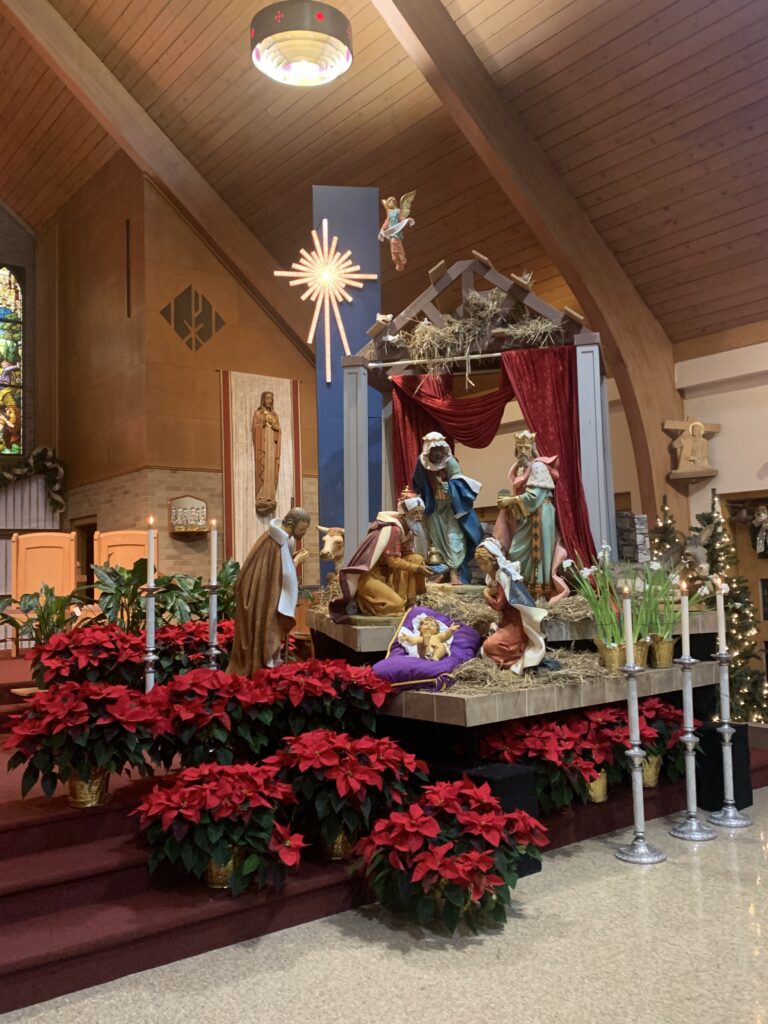 the entire world. Pope Francis continues saying, “Thanks solely to this encounter or renewed encounter with God’s love, which blossoms into an enriching friendship, we are liberated from our narrowness and self-absorption. We become fully human when we become more than human, when we let God bring us beyond ourselves in order to attain the fullest truth of our being.”
Look around at people. Where is life heading for them? What gives them direction? Even we who are people of faith can get distracted and lose our focus. God, in all of His fullness, is revealed in Jesus Christ and we can encounter Him! God is tangible, real, vulnerable, poor, and full of wonders, surprises, and opportunities. For those who are struggling and lost, today is a day of great joy. All they have to do is reach out and touch the truth of Christ. This presence is revealed in the poor, exploited, and vulnerable ones who cry out for compassion and love. But it is also found in the faithful ones who see in the Epiphany of God a liberation from structures and systems that hurt us, a narrowness of mind and heart that constricts us, and an absorption in our self-agenda that prevents us from seeing anything other than ourselves as important.
We have been given the charge of preaching this Good News. If only we could find a way to be more effective, it might stand a chance of doing what God intended it to do. There is always tomorrow and our memory of that bright new light that shone so brilliantly that Bethlehem night pointing us to truth and reminding us that we are loved.