PASCHAL TRIDUUM SCHEDULE

Holy Thursday – March 29

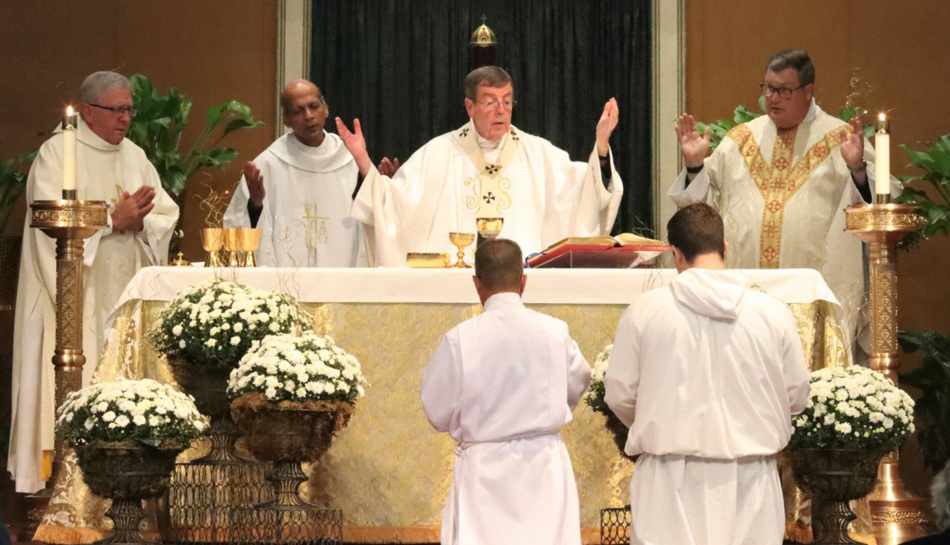
Mass of the Lord’s Supper – 7 p.m.

Followed by Eucharistic Adoration until midnight in the School Chapel

Good Friday – March 30 

 A day of fast and abstinence

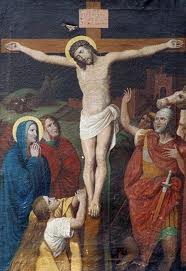
Stations of the Cross – 1:30 p.m.

Performance of Passion Play Presented

by the 8th Grade Class following the stations

Liturgy of the Lord’s Passion – 2:30 p.m.

Holy Saturday – March 31

Fasting and /or abstinence encouraged

Blessing of Food (Church) – 11 a.m.

Easter Vigil Mass – 8:30 p.m.

Easter Sunday – April 1 –

 Mass – 9:00 a.m. and Noon

Pallottine Collection 2018

Next Sunday (Palm Sunday) we will have a second collection, which will be for the mission and works of the Pallottines back in India. In the past years you have always been very generous and we are grateful for that. Know for sure that your sacrifices will go a long way. If you are not able to help financially do not be disheartened, just offer a prayer for our missionary works and you will receive your blessings in return.

Back in India, The Assumption of the Blessed Virgin Mary Province (ABVM) is venturing into new mission areas and our formation houses are still growing with many seminarians at different stages of their formation.  This April-May 2018, our Province will have 12 newly ordained priests. Who knows in years to come some of them may be sent to this country to serve.
We as Pallottines are very blessed to have this opportunity to serve here in this Archdiocese and especially here at St. Valentine Parish for the past 11 years.  Your prayers, words of encouragement and your support keep us going stronger. Thank you once again for all the sacrifices you make for the good of the parish.

 God Bless you.

Fr. Socorro


The Hour in John’s Gospel

In this weekend’s gospel Jesus is using the term “the hour.” He says, “The hour has come for the Son of Man to be glorified.” The phrase “the hour” or “my hour” or “my time” is a constant symbol of Jesus’ death. “The hour” or “my time” refers to all the events of the cross and all the trouble and sufferings surrounding the cross. Note two facts.

1. “The hour” is a set, fixed time in the purpose of God. Jesus said, “The hour has come” (Jn. 12:23-24, 27; 13:1). He has said some time before, “My time has not yet come” (Jn 2:4; see 7:6, 8, 30; 8:20). The hour of Jesus was inevitable: a definite period of time, a set of events, a number of experiences that He had to face and go through. As He said, He must die in order to bring forth fruit (v.24).

2. The hour was to have a definite beginning. There was a set time for the trouble to begin (v.27), a set time for Him to begin suffering for the sins of the world. There was a fixed hour when He was to begin suffering the pain and anguish, the agitation and disturbance, the pressure and weight, the strain and stress of having to be separated from God in behalf of man.

It’s good to know what Jesus means. There is a deep meaning of “the hour” in John’s Gospel that wants to reveal more to us than merely “this is the hour when Jesus died.

Fr. Henry


Complete Forgiveness of Sins through the Divine Mercy Novena

Did you ever wish you could start all over again and make your soul as pure as the day you were first baptized?  As Catholics, we are offered an opportunity to do just that.  It comes in the form of a plenary indulgence.
As part of the Divine Mercy Novena, a plenary indulgence can be obtained simply by making a good confession during the Lenten Season, starting the Novena on Good Friday and receiving the Eucharist on Divine Mercy Sunday.  We are also asked to pray for the Holy Father and do a deed of mercy.  Please take advantage of this wonderful gift given to us from our Lord.

Pamphlets are available in the back of church with full instructions on how to say the novena.  Take the time to familiarize yourself with this devotion and plan on joining your fellow parishioners on Divine Mercy Sunday, April 8, 2018 at 3:00 p.m.  The service will include recitation of the Chaplet and adoration of the Blessed Sacrament.

The Jerusalem Temple

This weekend’s gospel, Jesus speaks of the Jerusalem temple. A person must understand the layout of the temple in order to see what was happening in this event. The temple sat on the top of Mt. Zion, and it is thought to have covered about thirty acres of land. The temple consisted of two parts, the temple building itself and the temple precincts or courtyards. The Greek language has two different words to distinguish which is meant.

1. The temple building (naos) was a small ornate structure which sat in the center of the temple property. It was called the Holy Place or Holy of Holies. Only the High Priest could enter its walls, and he could enter only once during the year, on the Day of Atonement.

2. The temple precincts (hieron) were four courtyards that surrounded the temple building, each decreasing in their importance to the Jewish mind. It is important to know that great walls separated the courts from each other.

A. First, there was the Court of the Priests. Only the priests were allowed to enter this court. Within this courtyard stood the great furnishings, of worship; the Altar of Burnt Offering, the Bronze Wash Basin, the Seven Branched Lampstand, the Altar of Incense, and the Table of Showbread.

B. Second, there was the Court of the Israelites. This was a huge courtyard where Jewish worshippers met together for join services on the great feast days. It was also where worshippers handed over their sacrifices to the priests.

C. Third, there was the Court of the Women. Women were usually limited to this area except for joint worship with men. They could, however, enter the Court of the Israelites when they came to make a sacrifice or worship in a joint assembly on a great feast day.

D. Last, there was the Court of the Gentiles. It covered a vast space, surrounding all the other courtyards, and was the place of worship for all Gentile converts to Judaism.

Two facts need to be noted about the Court of the Gentiles.

    It was the courtyard farthest removed from the center of worship, the Most Holy place, which represented God’s very presence. A high wall separated the Court of the Gentiles from the other courts, disallowing any Gentile a closer approach into God’s presence. In fact, there were tablets hanging all around the wall threatening death to any Gentile who went beyond their own courtyard or center of worship.

     The Court of the Gentiles was the most corrupt. That prompted Jesus to say, ‘I will destroy this old temple’, I will destroy this temple which has become corrupt. Become a place of sin, a ‘den of thieves.’ And I will replace it with a new one. What   he’s talking about is  the temple of his own body.  What Jesus is saying, “I am God’s dwelling place among you, am the new Temple, my body is now the sacred dwelling place of God.He is declaring and creating this new temple of his body, the temple of the Church.


Fr. Henry Rebello 


Stewardship Thoughts

Today, the theme of water connects our Scripture passages from Exodus and the Gospel from St. John the Evangelist. The ancient Israelites grumble at Moses for bringing them and their livestock into the desert wilderness to die of thirst. God answers Moses’ cry by miraculously producing life-giving water from the rock, symbolic of the sacrament of Baptism. In the Gospel, at Jacob’s well, Jesus encounters a Samaritan woman. He tells her about the “living water” He can give for eternal life, which is not the same water found in the well. Jesus admonishes her: If you knew the gift of God. The Samaritan woman undergoes a conversion experience in which she brings others to Christ. St. Paul, in his Letter to the Roman community, reminds us of God’s outpouring love for us, even though we are sinners. Jesus’ gift of eternal life is for Jew and Gentile alike, for all faithful stewards who strive for holiness by following His teachings to deepen their love for Him. During Lent, pray the Stations of the Cross to draw closer to our Lord and Savior.